

Key Takeaways
- Baby mobiles support multiple areas of sensory development, including visual tracking, auditory recognition, and early hand-eye coordination.
- Occupational therapists recommend introducing high-contrast designs first, then transitioning to color and movement as your baby grows.
- Placement, timing, and how long your baby views a mobile all affect how much developmental benefit they receive.
- Musical mobiles with gentle sounds can support auditory discrimination alongside visual engagement.
- Overstimulation is a real concern - knowing when to rotate or remove a mobile is just as important as using one.
- browse baby mobile styles offers a wide range of thoughtfully designed mobiles that align with what pediatric occupational therapists recommend for early sensory growth.
Parents spend a lot of time picking out the perfect nursery decor - the crib, the colors, the soft lighting. But one item that often gets chosen more for its looks than its purpose is the baby mobile. That's a missed opportunity.
Occupational therapists who work with infants pay close attention to how babies interact with their environment, and a well-chosen mobile is one of the simplest, most effective tools you can add to a newborn's world. It's not about entertainment. It's about giving your baby's developing brain something meaningful to do during those early alert periods.
Here's what pediatric OTs actually recommend when it comes to using baby mobiles for sensory development, and how to make the most of them at every stage.
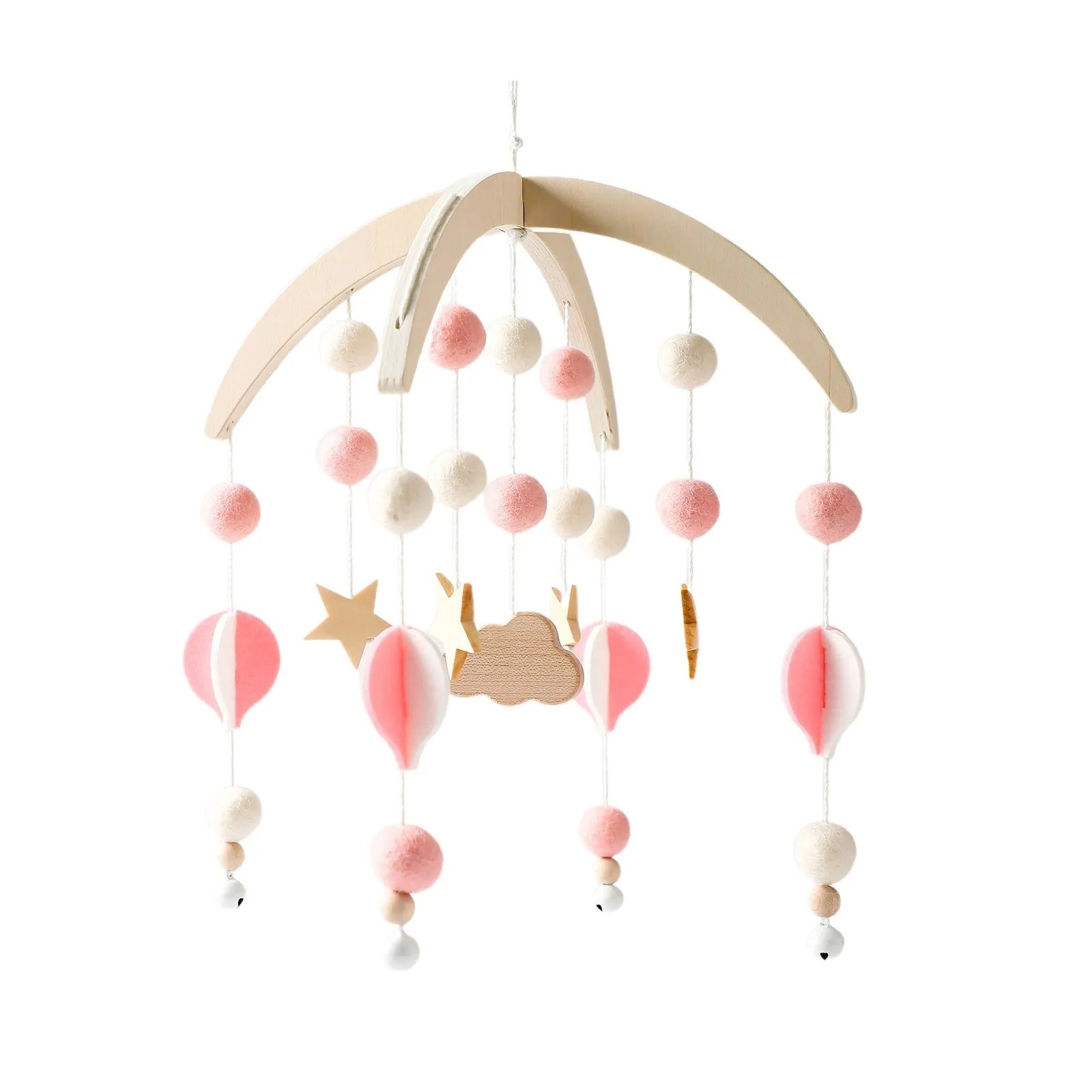
Why Occupational Therapists Take Baby Mobiles Seriously
Occupational therapy for babies focuses on supporting developmental milestones through purposeful activity. For infants, that means everything from head control and sensory processing to feeding and visual engagement. OTs often recommend specific tools for parents to use at home between sessions, and baby mobiles frequently make that list.
The reason is straightforward: a mobile provides structured visual and auditory input during a time when a baby's brain is rapidly building the connections it needs for later skills. Occupational therapists look at early infancy as a period where babies should start to visually track objects and explore their bodies by moving their hands, making tools that support visual stimulation particularly valuable.
A hanging mobile does exactly that. When a baby lies on their back and watches a slowly rotating shape above them, they're not just looking - they're training their eyes to follow movement, their brain to process contrast and color, and eventually their arms to reach toward something they want to touch.
Understanding What Your Baby's Senses Need at Each Stage
Before choosing a mobile, it helps to understand what your baby can actually perceive - because what looks beautiful to you as an adult may not be what engages your newborn's senses at all.
Birth to 2 Months: High Contrast Comes First
Newborns are born with very limited visual ability. Newborns can only perceive objects that are high-contrast and very close - approximately 30 cm or 12 inches - which is roughly the same distance as a nursing baby's eyes from a caregiver's face. This means that pastel animals in soft lavender tones aren't actually doing much for a brand-new baby's visual system.
What works at this stage is bold contrast - black and white, or deep red and white - in simple geometric or animal shapes. Newborns see high-contrast patterns first, and as their vision sharpens, they begin to respond to softer colors and more detailed shapes. A well-designed mobile takes this progression into account.
From a sensory processing standpoint, OTs recommend keeping things simple in the first two months. The goal isn't to pack in as much input as possible; it's to give the brain something it can actually process without becoming overwhelmed. Ten to fifteen minutes of engaged, calm viewing during an alert period is far more valuable than having a mobile spinning constantly.
2 to 4 Months: Movement Becomes Meaningful
Object tracking develops rapidly between two and six months of age, and by seven months, infants are generally tracking objects with their eyes rather impressively. This is the window when a gently rotating mobile does some of its best developmental work.
When your baby follows a hanging shape with their eyes from one side to the other, they're building smooth pursuit - one of the early visual skills that researchers have linked to later cognitive, language, and fine motor outcomes. That's not a small thing. It means the time your baby spends watching a mobile is genuinely preparing them for skills they'll use months and years down the road.
OTs suggest positioning babies so that the mobile falls in their midline - directly above them, not off to one side. Placing a baby on their back and using a rattle, bell, or hanging toy held at midline to practice tracking, then slowly moving the object to the right or left, helps develop visual pursuit in a structured way. A crib mobile does this passively every time it turns.
At Baby Cot Mobile, we carry options like ourmobile options with gentle music and motion that lets you adjust the pace and stimulus as your baby grows through this stage.
4 to 6 Months: Reaching and Grasping Enters the Picture
By around four months, many babies begin attempting to swat or reach toward objects above them. This is where the developmental value of a mobile shifts from purely visual to sensorimotor.
When babies reach out or bat at a moving mobile, they practice hand-eye coordination and grasp reflexes - early practice that lays the foundation for crawling, walking, and fine motor skills like holding a spoon.
OTs see this reaching behavior as a milestone worth encouraging. If your baby starts batting at their mobile, that's actually a signal to engage. You can do short supervised sessions where you gently lower a hanging toy to within reach, letting them feel success in grasping something they've been watching. Our baby rattles and educational rotating mobile is designed with this kind of interaction in mind.
What OTs Say About Musical Mobiles and Auditory Development
Sound is a whole sensory system in itself, and occupational therapists who work with infants pay just as much attention to auditory development as they do to visual and tactile growth.
Gentle, rhythmic music helps babies distinguish pitch and tone, which are early building blocks for language processing. Occupational therapists use playing soothing music or nature sounds as one method of stimulating auditory development in newborns. A musical crib mobile delivers this kind of gentle auditory input without requiring any active effort from a caregiver.
What matters is the quality and type of the sound. OTs generally recommend soft, melodic tones over sharp or jarring sounds. Lullabies, classical melodies, and nature sounds are well-tolerated by most babies. Harsh beeps or very loud sound effects, even if technically labeled as "musical," can be overstimulating and counterproductive for very young infants.
We also recommend looking for a mobile with adjustable volume, since every baby's sensory threshold is different. Some babies find soft music soothing during sleep transitions, while others respond better to purely visual input. A product like oursensory hanging toys for supervised play gives you that flexibility.
How to Use a Baby Mobile the OT-Approved Way
Knowing which mobile to choose is only part of the equation. How and when you use it matters just as much.
Watch for alert windows. Babies have predictable cycles of sleep, drowsiness, alertness, and fussiness. Mobile time is most productive during the calm-alert state, when your baby is awake and attentive but not yet hungry or overstimulated. This is usually shortly after a feed and a diaper change.
Keep sessions short and purposeful. Ten to fifteen minutes is generally enough. Leaving a mobile spinning continuously isn't harmful in most cases, but it does reduce the chance that your baby is actively engaging with it. A baby habituates quickly to constant stimulation, meaning they stop "seeing" it.
Rotate what's hanging. Pediatric OTs note that open-ended toys and materials that can be used in multiple ways offer more developmental value as they grow alongside the baby. The same principle applies to mobiles - switching out elements, adjusting the height, or introducing a new design can renew your baby's interest and provide fresh sensory input.
Don't ignore the placement. There's a real difference between a mobile hung directly above a baby versus off to one side. Consistently one-sided placement can encourage a preference for turning the head one way, which OTs watch closely as a potential risk factor for flat head syndrome (positional plagiocephaly). Centering the mobile encourages symmetrical neck movement and balanced visual engagement.
For safe placement guidance, our guide on how high a mobile should be above the crib walks through exactly this topic.
When Mobiles Support More Than Just Play
For some babies, sensory development doesn't follow a typical trajectory. Premature infants, babies with low muscle tone, or those showing early signs of sensory processing differences may benefit especially from thoughtful, structured mobile use.
Through occupational therapy, babies learn how to respond appropriately to sensory input in their environment, which helps them better understand cues from their body and surroundings - particularly helpful for babies with sensory processing difficulties.
A mobile can serve as one low-stimulation, controlled sensory experience that a parent can manage easily at home. If your baby seems consistently bothered by the mobile (turns away, becomes fussy, arches their back), that's information worth noting. It may point to sensory sensitivity that's worth discussing with your pediatrician or a pediatric OT.
On the other hand, if your baby seems unusually unresponsive - doesn't visually track by 3 months, doesn't attempt to reach by 5 months - that's also a signal to bring up with a professional. Our post on how baby mobiles encourage early visual tracking skills covers what typical visual development looks like and what to watch for.
Choosing a Mobile with Sensory Development in Mind
When browsing baby crib mobiles, OTs and developmental specialists generally look for a few key features:
- Contrast and color progression - A mobile that works from birth through six months should ideally offer high-contrast options early on and introduce color gradually.
- Gentle, controllable movement - Smooth rotation is preferable to erratic spinning. A 360-degree rotation that moves at a calm pace mirrors the natural visual tracking exercises OTs recommend.
- Adjustable sound - If the mobile plays music, volume control is important. Babies have different sensory thresholds, and what soothes one may overstimulate another.
- Safe materials - Non-toxic, baby-safe materials matter both for safety and for when your baby inevitably starts reaching and mouthing nearby objects.
- Appropriate placement options - A sturdymobile arms for secure nursery setups that allows you to adjust height is important for keeping the mobile within your baby's optimal focal range as they develop.
You can also explore our post on how to choose the perfect baby crib mobile for your nursery theme for a practical breakdown of what to look for at different price points and styles.
When It's Time to Move On
Most OTs agree that by around five to six months, the primary developmental value of a hanging crib mobile has largely been realized. Babies at this point are more interested in toys they can hold, mouths, and shake - and a mobile hanging out of reach can start to feel more frustrating than engaging.
Most babies outgrow fixed mobiles around six months, once they begin preferring toys they can touch and move themselves. This is completely normal and healthy. It's a sign that your baby's sensory and motor development is progressing exactly as it should.
Safety also becomes a bigger concern once a baby can pull to stand in the crib. At that point, any overhead mobile should be removed entirely to prevent the risk of entanglement.

A Final Word from Us at Baby Cot Mobile
We've put a lot of thought into our collection because we know that what hangs above your baby's head in those first months isn't just decor. It's one of their first teachers.
The tips in this post reflect what occupational therapists see working in clinical practice and what developmental research consistently supports. A thoughtfully chosen and appropriately used mobile genuinely supports the sensory and visual development that sets the stage for everything else your child will learn.
If you'd like help choosing the right mobile for your baby's age and developmental stage, our team is happy to talk it through. Get in touch with us here and we'll help you find something that works for your nursery, your baby, and their growing brain.
Frequently Asked Questions
What type of baby mobile is best for sensory development? For newborns, high-contrast black-and-white mobiles are most appropriate because they match the limited visual range of a very young baby's eyes. As your baby grows past two months, mobiles with color, gentle movement, and soft music become more stimulating and developmentally engaging. Look for features like smooth rotation, adjustable sound, and safe materials.
When should I introduce a baby mobile for sensory stimulation? You can introduce a mobile from birth. In the first few weeks, even a stationary high-contrast mobile within 8-12 inches of your baby's face provides useful visual input. Gently moving mobiles can be introduced around two to three weeks of age, once your baby shows signs of visual alertness.
How long should a baby look at a mobile each day? Short, focused sessions during your baby's calm-alert periods are more valuable than continuous exposure. Ten to fifteen minutes at a time is a common recommendation from pediatric specialists. Constant, uninterrupted movement can lead to habituation, where your baby effectively tunes the mobile out.
Can a baby mobile help with visual tracking development? Yes. A gently rotating mobile gives babies a moving target to follow with their eyes, which directly exercises the visual tracking ability that develops rapidly between two and six months. This early tracking practice has been linked to later cognitive and motor development milestones.
What do occupational therapists look for in a baby mobile? OTs generally look for appropriate contrast and color for the baby's age, smooth and controllable movement, gentle and adjustable sound if music is included, non-toxic materials, and safe and secure mounting. They also pay attention to where the mobile is placed relative to the baby's midline to encourage symmetrical development.
Can overstimulation from a baby mobile be harmful? Overstimulation is a real concern, especially for very young or premature babies. Signs that a mobile may be too stimulating include your baby turning away, becoming fussy, or arching their back during mobile time. If you observe these signals consistently, try reducing the visual complexity, turning off sound, or limiting session length.
At what age should a baby mobile be removed from the crib? Most developmental specialists recommend removing a crib mobile by around five to six months, or earlier if your baby begins pulling up to stand. Once a baby can reach and potentially pull on the mobile, it becomes a safety risk. By this age, babies are typically more interested in handheld toys that they can directly manipulate and explore.