

Key Takeaways
- Seasonal DIY mobiles are a creative way to refresh the nursery throughout the year while keeping the design personal and meaningful.
- Safety is the non-negotiable foundation of any DIY mobile - material choice, cord length, attachment security, and total hanging weight all need careful attention.
- Natural materials like felt, wood, and cotton work well across all four seasons and are easier to keep baby-safe than synthetic or painted alternatives.
- A reliable hanger arm is just as important as the mobile itself - a DIY mobile hanging from an unstable arm is a safety concern regardless of how well-made the elements are.
- Parents who enjoy making their own elements can pair them with a quality pre-made arm and frame to simplify the process considerably.
There is something satisfying about making something for a baby's nursery with your own hands. A DIY mobile sits in a particular category - it is visible, slowly turning, and one of the first things a newborn will actually focus on. Getting it right matters, both in terms of what it looks like and how safely it is constructed.
Atshop mobiles by nursery need, we genuinely appreciate the creativity that goes into handmade nursery pieces. We also know that the questions around DIY mobiles are often more practical than they first appear: What materials are safe? How do you hang it properly? What actually looks good in a nursery? This post walks through seasonal concepts for all four seasons with those practical questions at the center.
Before You Begin: The Safety Foundation
Every DIY mobile, regardless of how beautiful the design, has to start with a safety framework. This is not a formality - it is the difference between a lovely nursery feature and a hazard.
Cord and string length. Any individual hanging cord or string should be short enough that it cannot wrap around a baby's neck or become an entanglement risk if somehow reached. This typically means keeping individual hangers no longer than necessary for the aesthetic - usually a few inches per element rather than long trailing strings.
Attachment security. Each element that hangs from the mobile should be tested before installation. Give every piece a firm tug. If it pulls free with light resistance, it needs to be reattached more securely or left out entirely. Small pieces that detach become choking hazards.
Total weight. A heavier DIY mobile puts more stress on the hanger arm and its crib clamp. Keep the overall weight manageable and verify that the arm you are using is rated or designed for the load.
Cord-free zones. Any string or wire that forms the armature of the mobile - the part the elements hang from - should not create a loop or accessible cord within the crib zone. Structure the upper framework so that nothing below the arm creates an accidental loop.
Our post on safe and effective placement guidelines for nursery mobiles covers height and positioning in detail and is worth reading before any installation, DIY or otherwise.
The Hanger: Where to Start
One option many parents find useful is to purchase a quality pre-made arm and frame, then create their own hanging elements to attach to it. This approach gives you creative freedom over the visual design while keeping the structural foundation reliable.
Ouradjustable supports for baby mobiles includes options designed to hold handmade elements securely. A wooden arm is a particularly good choice for DIY projects because it is stable, does not flex or bow under moderate weight, and holds up well over time. If you want to build a guide for making your own arm, we also have a post on building a DIY mobile hanger from scratch that walks through the process step by step.
Spring: Botanicals, Florals, and Soft Pastels
Spring is one of the most natural fits for a nursery mobile. The color language is already soft and nursery-appropriate - pale greens, blush pinks, lilac, soft yellows - and the subject matter translates easily into felt or fabric shapes.
What to make: Felt flowers in varying sizes are among the most accessible DIY shapes for a nursery mobile. Cut petals individually and layer them together around a button center, then stitch or glue securely. Simple leaf shapes, butterflies cut from patterned cotton fabric, and small felt birds are all workable at a beginner skill level.
Materials: Quality felt in spring tones holds its shape well and does not require finishing at the edges the way woven fabric does. Natural cotton fabric in small prints also works well for flat shapes backed with interfacing for stability.
Color palette: Think muted rather than saturated. Dusty rose, sage green, soft lavender, and warm cream tend to photograph well in nursery settings and do not visually overwhelm the space.
For a reference point on what a well-executed floral wooden mobile looks like in practice, the flower handmade wooden mobile with rattle for crib is a good example of how botanical shapes can work in a nursery context without feeling overly decorative.
Summer: Ocean, Sky, and Sun Themes
Summer opens up a slightly brighter palette and a wider range of shapes - sun, clouds, stars, sea creatures, and sky elements all fit the season and translate well into DIY mobile elements.
What to make: Felt sun shapes with layered petal rays, simple cloud forms in white or pale blue cotton, and small wooden painted stars hung at varying heights create a cohesive sky theme. For an ocean approach, simple fish shapes, felt coral, and small wooden or fabric waves work well together.
Materials: For wooden elements, use untreated or food-safe finished wood. Small laser-cut wooden shapes are widely available from craft suppliers and can be painted with non-toxic watercolor or left natural for a more understated look. Avoid acrylic paints with strong finishes, particularly on elements that might be handled by the baby later.
Color palette: Sky themes work in dusty blue, white, and pale gold. Ocean themes suit seafoam green, coral, and sandy beige. Both palettes tend to read as calming rather than stimulating, which suits a sleep environment well.
The ocean wooden baby mobile with rattles for the crib shows how this kind of coastal theme can be executed with natural materials - useful to look at when you are planning your own version.
Autumn: Warmth, Texture, and Natural Elements
Autumn is one of the richest seasons for nursery design. The warm oranges, rusts, deep yellows, and forest greens of fall translate beautifully into felt and natural fiber mobile elements, and the subject matter - leaves, acorns, mushrooms, woodland animals - is consistently popular in nursery decor.
What to make: Felt leaves in varying autumn tones are simple enough for a beginner and look impressive in groups. Stitch or cut shapes in several sizes - large maple, smaller oak, oval birch - and hang them in clusters at slightly different heights for a layered effect. Small felt acorns, pinecones, or woodland creatures like foxes and owls are popular additions.
Materials: Wool felt rather than synthetic felt is worth the extra cost for this kind of project. It has more body, holds its shape better, and has a warmth to the texture that suits autumn tones. For natural accent pieces, small dried elements like seed pods can be used decoratively, but must be sealed and checked carefully to ensure they cannot shed small particles.
Color palette: Terracotta, mustard yellow, forest green, burnt orange, and cream form a classic autumn palette that works across a range of nursery styles from minimalist to cottagecore.
For context on how themed mobiles fit within a broader nursery aesthetic, our post on matching a mobile to your nursery's adventure or nature theme is worth reading alongside your autumn planning.
Winter: Stars, Snowflakes, and Quiet Night Themes
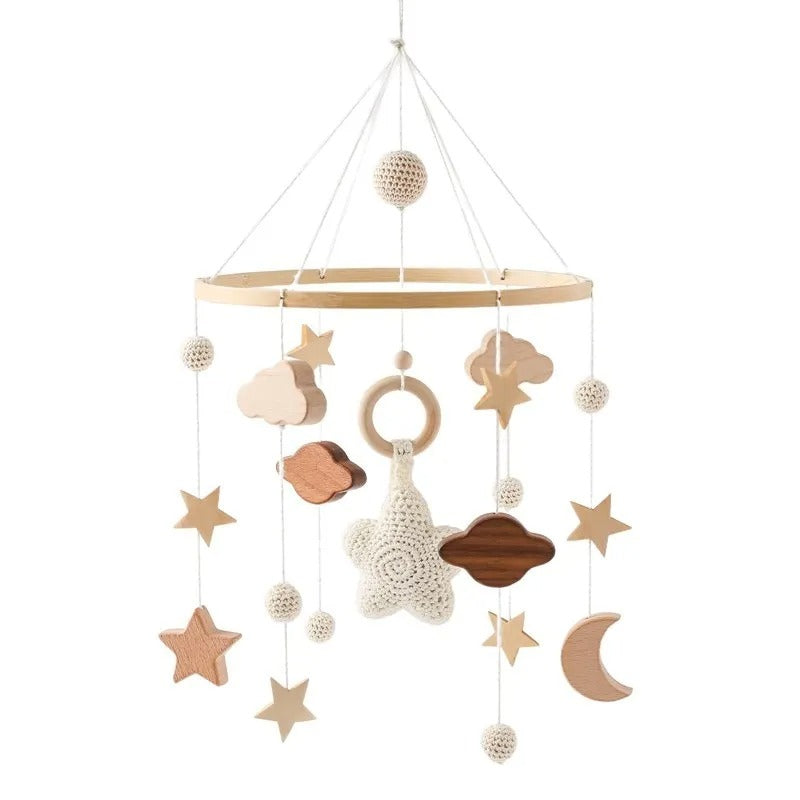
Winter mobile designs tend toward the celestial - stars, moons, snowflakes, and soft night-sky imagery. These themes sit naturally in a nursery regardless of season, but feel particularly appropriate in the colder months.
What to make: Six-pointed snowflake shapes can be cut from white felt or heavy watercolor paper sealed with a matte varnish for stiffness. Felt stars in cream and silver work well layered with moon shapes. Small white or silver wooden beads can be threaded as accent pieces between hanging elements for a subtle shimmer without reflective glare.

Materials: Pale natural wood, white and silver felt, cream cotton muslin, and natural fiber cord all suit a winter palette well. Avoid metallic Mylar or shiny plastic elements, which can create unexpected glare and become visually stimulating in a way that disrupts a calm sleep environment.
Color palette: White, ivory, pale blue-grey, and soft gold form a quiet, elegant winter palette. A deeper navy or charcoal accent can add depth without making the mobile feel heavy or dark.
The rainbow tassel wooden baby mobile demonstrates how texture-based elements - in that case, fabric tassels rather than flat shapes - can add visual interest to a mobile without relying on color saturation. The same principle applies to winter designs where the interest comes from shape and material rather than bright tones.
Putting It All Together
Once you have your seasonal elements made and tested, assembly follows a straightforward process. Tie or loop each element to the armature at your chosen height, test each connection point, and then hang the entire assembled mobile - not element by element after installation.
Our guide on how to make a complete DIY baby mobile from planning to hanging covers the full construction and installation process and is worth reading before you begin assembly for the first time.
For parents who want DIY creative elements but prefer a quality manufactured base, browsing ourcompare nursery mobile styles can also serve as a useful reference point for scale, proportion, and hanging weight before you build your own.
Baby Cot Mobile exists to support parents who care about what goes into their baby's nursery - whether that means choosing something we have made, or getting thoughtful advice on making something yourself.
If you have questions about materials, hanger compatibility, or safe construction for a DIY project you are planning, we are happy to help.
Contact the Baby Cot Mobile team here and we will point you in the right direction.
Frequently Asked Questions
What materials are safe for a DIY baby mobile?
Quality felt, untreated or food-safe finished wood, tightly woven natural cotton fabric, and natural fiber cord are generally considered safe options. Avoid materials that shed easily, have small loose components, use strong chemical finishes, or create long loose cords. All elements should be firmly attached and tested before installation.
How do you make a seasonal DIY baby mobile?
Start with a stable hanger arm and a clear design concept for your chosen season. Cut or source your hanging elements from safe materials, attach them securely to your armature at appropriate lengths, test every connection point before hanging, and install at a safe height above the crib mattress - generally at least 12 inches of clearance between the lowest element and the mattress surface.
Can I hang handmade elements on a store-bought mobile arm?
Yes. Many parents create their own decorative elements and attach them to a purpose-made wooden hanger arm. This approach combines creative control with structural reliability. Make sure the total weight of your handmade elements is appropriate for the arm you are using.
What is the safest cord length for DIY mobile elements?
Individual hanging cords or strings should be kept as short as practical for the design - typically just enough to create the visual depth you want, rather than long trailing lengths. Strings should never be long enough to create a loop that could pose an entanglement risk.
How do I make sure my DIY mobile does not spin unevenly?
Balance is a combination of weight distribution and symmetrical hanging. Attach elements in pairs or groups at roughly equal weights on opposing sides. If the mobile tilts to one side, adjust by redistributing elements or adding small counterweights made from the same materials as your design.
Are DIY baby mobiles as safe as manufactured ones?
A well-constructed DIY mobile using appropriate materials and following standard safety guidelines can be used safely. The key variables are secure attachment, appropriate cord length, safe materials, and stable installation. Manufactured mobiles go through safety testing that DIY items do not, so the responsibility for safety verification rests entirely with the parent when building from scratch.
What seasonal themes work well for a baby nursery mobile?
Spring themes often use florals, butterflies, and soft pastel palettes. Summer suits ocean creatures, clouds, and sun shapes. Autumn works well with felt leaves, woodland animals, and warm earth tones. Winter themes often use stars, snowflakes, and moon shapes in pale or neutral palettes. All four seasonal approaches translate well into felt and natural wood elements.