

Key Takeaways
- The practice of hanging objects above infants dates back thousands of years across multiple continents and cultures.
- Ancient civilizations used suspended objects for spiritual protection, not decoration - the developmental purpose came much later.
- The Ojibwe people of North America created some of the earliest documented hanging cradle charms, traditionally known as dreamcatcher spider webs hung on cradleboards.
- Wind chimes in Asia, particularly Japan's furin tradition, share deep roots with the concept of hanging suspended objects near sleeping spaces.
- The modern baby mobile as a nursery fixture emerged in the mid-20th century, shaped by both the sculptural art movement and pediatric developmental research.
- Atbrowse baby mobile styles, our designs draw on this long history of purposeful infant care while meeting today's standards for safety and sensory development.
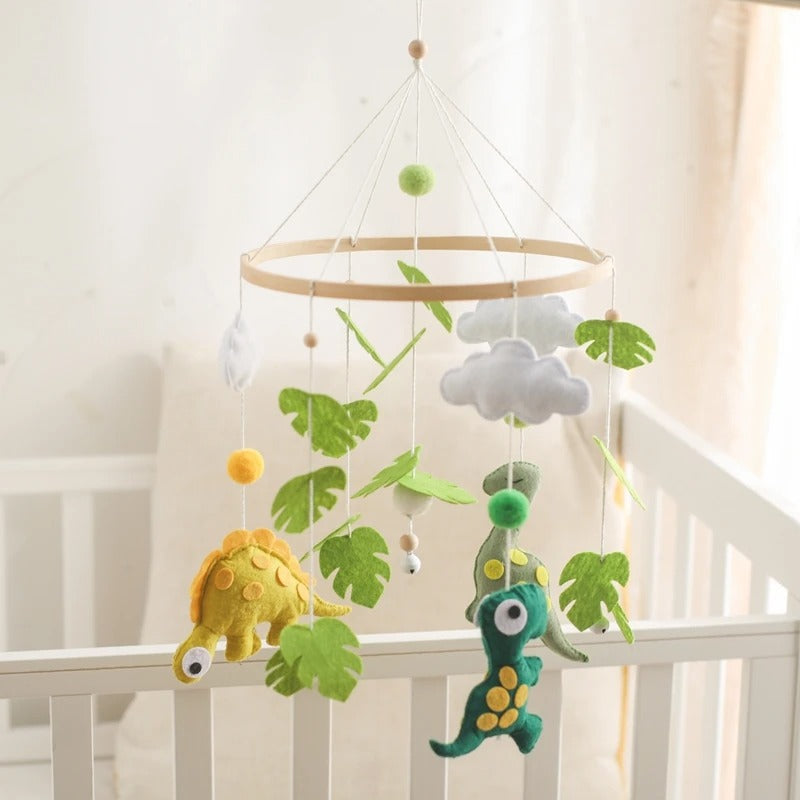
There's something deeply human about the impulse to hang something above a sleeping baby. Whether it's woven from willow and sinew, fashioned from bronze bells, or crafted from soft felt animals on a rotating arm, the basic instinct is the same: give this new little person something meaningful overhead.
What's interesting, when you trace it back, is how independently that instinct appeared across cultures separated by thousands of miles and thousands of years. The history of cot mobiles isn't one straight line. It's a collection of parallel threads, each shaped by different beliefs, materials, and understandings of what a baby needs.
Ancient Civilizations: Protection First
Before anyone was thinking about visual tracking or sensory development, the earliest hanging objects above infant sleeping spaces served a different purpose entirely - spiritual protection.
In ancient Egypt, small objects were hung over cradles to protect infants from evil spirits, and these early versions were often made from natural materials such as reeds, wood, and feathers. In ancient Greece, parents would hang objects like pottery and shells above their babies' cribs to provide visual stimulation and protection.
Even rattles for infants in ancient Egypt, dating to around 1500 BCE and made from hollow clay or wood filled with small beads or pebbles, were likely used not only for play but also for their believed protective properties, warding off evil spirits. The line between a toy and a talisman was blurry, if it existed at all. What mattered was that something was present above or near the baby, doing protective work.
Wind chimes - which share the same basic principle as a cot mobile - have existed for thousands of years, with people in ancient Greece, Rome, and Asia making them from bronze or glass, often with bells attached, hung outdoors for good luck or to ward off evil spirits.
This protective reasoning appears again and again across cultures that had no contact with one another. It suggests something nearly universal: the vulnerability of a newborn prompted people everywhere to mark and guard that space above them with objects that carried meaning.
The Ojibwe Tradition: The Original Cradle Charm
One of the most directly documented examples of a cultural tradition that maps closely to what we now call a cot mobile comes from the Ojibwe people of North America.
Even infants were provided with protective charms in the form of "spiderwebs" hung on the hoop of a cradleboard. In old times this netting was made of nettle fiber. Two spider webs were usually hung on the hoop, and it was said that they "caught any harm that might be in the air as a spider's web catches and holds whatever comes in contact with it."
This tradition, now widely recognized as the origin of dreamcatchers, was not a decorative gesture. Along with offering physical protection, the hoop of a cradleboard encircled the head and served not only as a carry handle but as a place to hang sacred objects, including dangling good luck charms, beaded amulets, and protective items like dreamcatchers and medicine wheels.
The cradleboard itself was a sophisticated piece of infant care technology - portable, protective, and richly symbolic. The objects hung from it were intentional and meaningful, chosen with care by grandmothers and elders for the specific child they were made for. The idea that something hanging above or around a sleeping infant carried both practical and spiritual weight is as old as any culture we can document.
East Asia: Wind, Sound, and the Hanging Bell
In China and Japan, the tradition of suspended objects near living and sleeping spaces developed through an entirely different cultural lens - one that focused on sound as much as sight.
Wind chimes originated in China as small bronze bells called senputaku, which were hung in temples and pagodas to ward off evil spirits through their sound and movement. These wind chimes eventually made their way to Japan, where they evolved into the furin we know today.
The word furin was first used in Japan during the Heian period, when wind bells were hung from eaves at Buddhist temples as talismans to ward off evil spirits. Over time, they spread from sacred spaces into the homes of the nobility and eventually into everyday domestic life.
While furin were not placed directly above sleeping infants in the same way cradleboard charms were, they represent the same foundational logic: a suspended, sound-producing object in the living environment carries protective and calming power. Traditionally believed to ward off evil spirits, these chimes were thought to protect homes, especially when strong winds blew through, and their gentle ringing was seen as a harbinger of good fortune, bringing peace and calm to those who hear them.
The sound dimension of this tradition is particularly relevant to the modern cot mobile. Musical mobiles that play soft melodies or nature sounds draw from a lineage stretching back centuries - the idea that gentle, rhythmic sound above a sleeping space is both soothing and meaningful is not a 20th-century invention.
Scandinavia and Northern Europe: The Minimalist Tradition
In Nordic cultures, the tradition of hanging objects in domestic spaces developed its own aesthetic character - one that values simplicity, natural materials, and clean form.
In Nordic countries, baby mobiles often reflect the minimalist and functional design ethos that characterizes Scandinavian craft and architecture more broadly. Wood, wool, and natural fibers dominate, and the emphasis is on gentle visual interest rather than stimulation for its own sake. This approach aligns well with what we now understand about newborn visual development - simple shapes and soft contrast in the earliest weeks, with complexity introduced gradually.
The Scandinavian tradition also carried symbolic elements. Hanging objects in the home were believed to mark a space as inhabited and protected, and gifts of handmade items for a newborn were a communal expression of care and welcome.
This heritage continues to influence contemporary nursery design. Many parents today are drawn to wooden and felt mobiles with clean shapes and natural tones - a preference that reflects, perhaps more than they realize, a design tradition with deep cultural roots.
Ourmobile arms for secure nursery setups reflects this same restrained aesthetic - functional, well-made, and visually calm.
India and South Asia: Color, Story, and the Jhoola
In South Asian traditions, the cultural relationship between infants and hanging objects takes on a vibrant, narrative character.
In India, baby mobiles often take inspiration from the traditional jhoola (swings). These mobiles might feature figures from Indian mythology or natural elements like birds and flowers, woven into intricate designs with bright colors and beads.
The jhoola - a traditional hanging swing - is a central symbol in Indian culture, associated with celebration, divinity, and the idea of gentle rocking motion as comfort and blessing. Images of deities resting in swings appear throughout Indian religious art, and the practice of creating a beautifully decorated hanging space for an infant draws from this tradition.
Color in these designs is not incidental. Bright reds, yellows, and blues are chosen deliberately - partly for visual stimulation, partly because each color carries symbolic meaning within the culture. What looks like decoration to an outside observer is, within its cultural context, a carefully composed statement about protection, prosperity, and identity.
20th Century: From Art to Nursery Staple
The baby mobile as a specifically designed, mass-produced nursery product is a relatively recent development, but its origin story has an unexpected twist.
Mobiles first entered the world as a form of sculptural art. In the 1930s, an American artist named Alexander Calder began experimenting with mobiles by introducing moving pieces into the sculptures he had been working on, which were mostly circus animals made from wire and wood. It is thought that baby mobiles evolved from this concept.
From kinetic art to the nursery - the leap is not as strange as it sounds. Calder's mobiles were designed to move with air currents, creating gentle, unpredictable motion. Parents noticed that babies responded to moving objects above them, and the commercial baby mobile industry followed.
The post-war era saw an increase in the mass production of baby mobiles. Advancements in manufacturing and materials made them more accessible and affordable. Plastic became a popular material, allowing for a range of colors and shapes. This era also saw the introduction of musical mobiles, which played lullabies to soothe babies to sleep. During the 1970s and 1980s, there was a surge in educational theories that emphasized the role of early childhood experiences in cognitive development, and baby mobiles became tools for learning and development, with designs incorporating mirrors and specific features to engage babies' attention and promote visual tracking.
This shift - from spiritual object to developmental tool - is the defining pivot in the history of the cot mobile. The intent changed, even if the basic form did not.
What the History Tells Us
Looking across these traditions, a few things stand out.
Every culture that left records of infant care, in some form, placed meaningful objects in or above the infant's sleeping space. The specific objects varied enormously - bronze bells, woven webs, pottery shells, carved wood, embroidered fabric - but the impulse was consistent.
The meaning attached to those objects also shifted based on what each culture valued most. Spiritual protection dominated for most of recorded history. The developmental lens is genuinely new - perhaps only a few decades old in its fully articulated form. But the underlying belief that what surrounds a baby matters has never changed.
At Baby Cot Mobile, we find this history genuinely interesting, not just as background context but as a reminder of what we're participating in when we design something meant to hang above a child. Ourcrib mobile options for your nursery carries forward a tradition that is, in its deepest form, about care and attention given shape.
How Design Reflects Cultural Heritage Today
The cot mobile market today is, in many ways, a compressed history of all these influences existing side by side. You can find mobiles that echo Montessori simplicity, mobiles that reference dreamcatcher aesthetics, mobiles inspired by Scandinavian folk art, and mobiles featuring animals and patterns drawn from Indigenous Australian imagery.
Mobiles inspired by Australian Aboriginal art often feature motifs and patterns significant in Aboriginal culture - usually colorful and telling stories through symbols and imagery. In Central and South America, mobiles often incorporate elements of traditional textiles and crafts, with bright colors, bold patterns, and handmade fabrics reflecting the rich cultural history and artisanal skills.
What this cross-cultural borrowing reflects, at its best, is a recognition that different traditions have arrived at thoughtful answers to the same question: what does a baby need in their immediate environment, and how do we make that thing with care?
We think about this when designing the Baby Cot Mobile range. Products like our celestial stars, clouds, and angel doll nursery hanging mobile draw on imagery that has appeared in infant care across multiple cultures - the sky, stars, and gentle suspended forms - because these images have resonated with caregivers for a very long time.
For parents interested in the tummy time connection to early development, our post on how mobiles and tummy time support each other adds useful context.
If you're starting from scratch and want practical guidance on choosing a mobile that works for your baby's developmental stage, our guide on what to look for in a crib mobile before you buy walks through the key considerations clearly.
And if you're curious about what the current research says on the sensory benefits of mobiles, our piece on the developmental benefits of crib mobiles covers that in depth.
A Continuing Tradition
The history of cot mobiles across different cultures is, ultimately, a history of parents paying attention to their infants and finding ways to respond to what they saw. A baby's gaze drifts upward. A baby stills when something catches their eye. A baby is soothed by gentle, rhythmic sound.
These observations, made by caregivers in every era and on every continent, are what produced this long, varied, and still-evolving tradition.
If you'd like help finding a Baby Cot Mobile design that fits your nursery, your values, and your baby's needs, we'd love to hear from you. Reach out to our team here and we'll help you find something that feels right.
Frequently Asked Questions
What is the history of baby cot mobiles? The history of cot mobiles stretches back thousands of years, with ancient civilizations in Egypt, Greece, and Rome hanging objects above infant sleeping spaces for spiritual protection. Over time, different cultures developed their own versions - from Native American cradleboard charms to Asian wind bell traditions. The modern baby mobile as a nursery fixture emerged in the mid-20th century, influenced by the kinetic sculptures of artist Alexander Calder and later shaped by developmental research in pediatric psychology.
Which culture first used hanging objects above baby cradles? Multiple cultures appear to have developed this practice independently. Ancient Egypt and Greece used hanging objects above cradles for protection from around 1500 BCE. The Ojibwe people of North America hung woven spider web charms on cradleboards, a tradition documented by ethnographers in the early 20th century. Asian wind chime traditions that influenced infant environments trace back over 1,200 years. There is no single point of origin.
What were traditional baby mobiles made from? Materials varied by culture and era. Ancient Egyptian infant items were made from clay, wood, and natural fibers. Ojibwe cradleboard charms used willow hoops and nettle fiber or sinew. Asian wind bells were made from bronze and later glass. European traditions used carved wood, wicker, and fabric. The introduction of plastic in the mid-20th century allowed for mass-produced colorful designs, while recent decades have seen a return to natural materials like felt, wool, and sustainably sourced wood.
Did ancient cultures understand that mobiles helped baby development? No. For most of recorded history, objects hung above infants were understood primarily as protective or spiritual objects, not developmental tools. The concept of a cot mobile as something that specifically supports visual tracking, cognitive development, and sensory processing is a product of 20th-century pediatric research and educational theory. The form predates the developmental rationale by thousands of years.
How did Alexander Calder influence baby mobiles? In the 1930s, the American sculptor Alexander Calder created kinetic artworks he called mobiles - sculptures with moving parts balanced to shift gently in the air. His work is widely credited as the direct ancestor of the commercial baby mobile. The visual appeal of hanging, moving forms above a baby and the observed calming effect on infants led manufacturers to adapt the sculptural concept for the nursery, beginning in the 1950s.
What does the dreamcatcher tradition have to do with cot mobiles? The dreamcatcher originates in Ojibwe (Chippewa) culture as a protective woven charm specifically made to hang above an infant's sleeping space on a cradleboard. It is one of the earliest and most clearly documented cultural traditions of placing a hanging, meaningful object above a sleeping baby - a direct historical ancestor of the modern cot mobile concept, even though its design, materials, and spiritual meaning are distinct and specific to its culture of origin.
Why do baby mobiles look so different across cultures? Because each culture brought its own materials, symbols, beliefs, and aesthetic values to the basic idea of a hanging object above an infant. Nordic traditions favored simple wood and natural fibers. Indian designs drew on mythology and used vivid color. Australian Aboriginal-inspired designs used symbolic patterns and storytelling imagery. What unites them is not the form but the intention - every version reflects a culture's way of expressing care for a new baby.